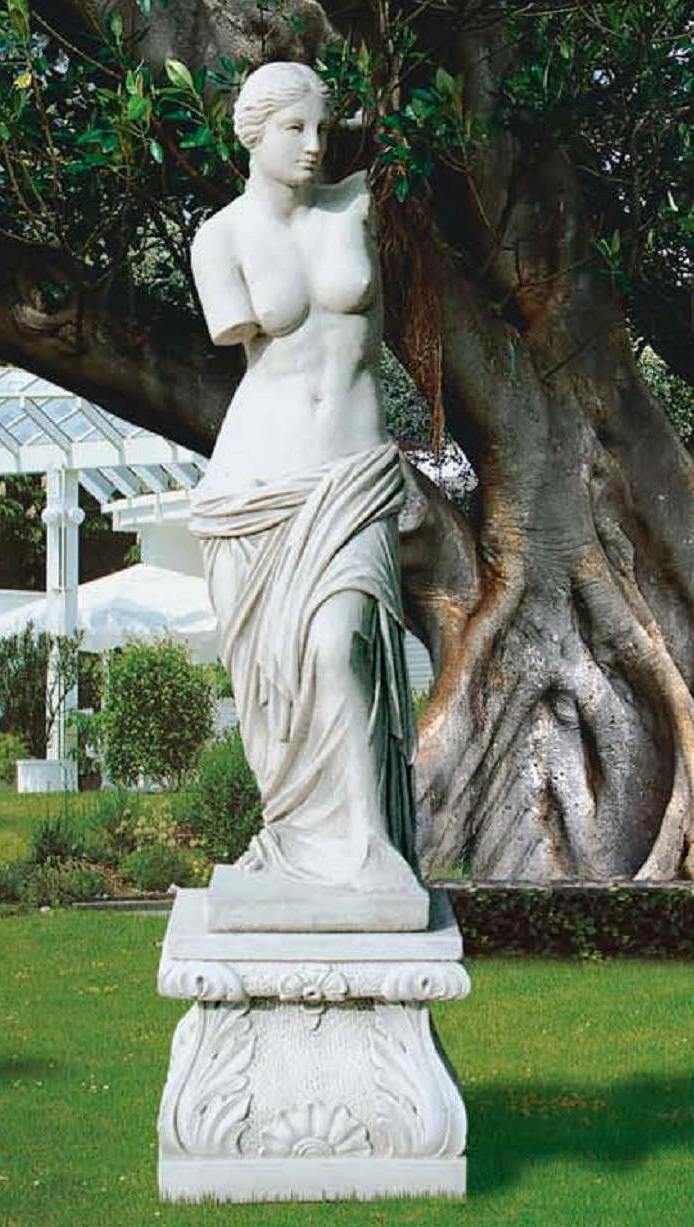
Aphrodite of Milos,
better known as the Venus de Milo, is an ancient
Greek statue and one of the most famous works of ancient Greek
sculpture. Created at some time between 130 and 100 BCE, it is
believed to depict Aphrodite (Venus to the Romans) the Greek
goddess of love and beauty. It is a marble sculpture, slightly
larger than life size at 203 cm (6 ft 8 in) high. Its arms and
original plinth have been lost. From an inscription that was on
its plinth, it is thought to be the work of Alexandros of
Antioch; it was earlier mistakenly attributed to the master
sculptor Praxiteles.
|
||||||||||







Click on Venus Di Milo Statue image back Made in Borgo San Giacomo , Italy !